
Former King Gyanendra Questions Election Timing in Video Message on Democracy Day
On National Democracy Day, ex-King Gyanendra Shah criticized the current political system and suggested resolving national crises before the March 5 polls. His message revives monarchy discussions amid Gen Z-led calls for change. #NepalElection #GyanendraShah #DemocracyDay
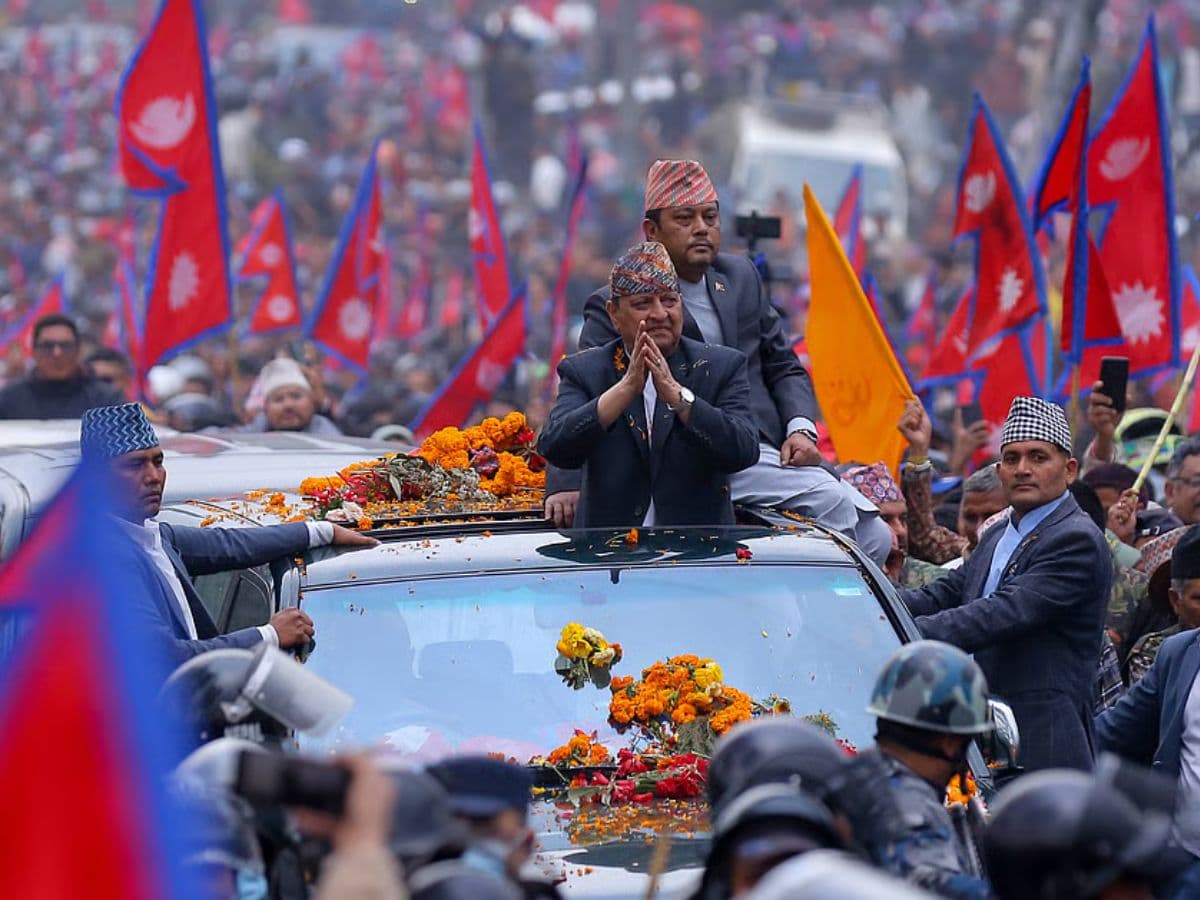
KATHMANDU, February 18, 2026 — Former King Gyanendra Shah released an eight-minute video message today on the 74th National Democracy Day, expressing deep dissatisfaction with Nepal's current political landscape and openly questioning whether the country is in a suitable position to hold the upcoming March 5 House of Representatives elections.
In the carefully worded address, Shah acknowledged that every political system contains positive elements worth preserving but emphasized that flawed aspects must be discarded for true progress. He argued that the prevailing public sentiment appears focused on resolving deep national crises—ranging from economic instability and governance failures to social divisions—before proceeding to the polls.
Shah stressed the need for broad national consensus to address these issues, warning that rushing into elections without such agreement could lead to future conflict and prolonged instability. He paid tribute to King Tribhuvan and the martyrs of the 2007 BS democratic revolution, reminding viewers of the historical collaboration between the monarchy and the people in establishing democracy in Nepal.
The message was released on the eve of Democracy Day (Falgun 7), a date commemorating the end of the Rana regime in 1951 and the dawn of multiparty democracy. Shah's intervention comes at a highly sensitive time: Nepal remains under an interim administration led by former Chief Justice Sushila Karki following the dramatic Gen Z-led protests in September 2025. Those nationwide demonstrations, sparked by corruption allegations, economic hardship, and a controversial social media regulation attempt, resulted in significant vandalism, human casualties, and the eventual collapse of the previous government.
The protests, primarily driven by youth frustrated with entrenched political elites, led to widespread calls for systemic overhaul, accountability, and fresh leadership. While the interim setup has stabilized preparations for the March 5 polls—including voter registration closing soon and campaigns intensifying—public trust in the republican system remains fragile for many.
Shah's return to public discourse has galvanized pro-monarchy supporters. In recent weeks, crowds have gathered at Tribhuvan International Airport upon his arrivals from abroad, chanting slogans for monarchy restoration as a stabilizing force amid perceived republican failures. Social media footage shows enthusiastic welcomes, with some viewing the former king as a symbol of unity and national identity.
However, critics—including leaders from major parties like Nepali Congress and CPN-UML—dismiss the message as an opportunistic attempt to exploit public disillusionment. They argue that the monarchy was abolished in 2008 through a constituent assembly process and that reviving it would undermine decades of democratic gains.
Political analysts note that Shah's timing is strategic. With over 915,000 new voters (many young) added since 2022, and youth sentiment still raw from the 2025 events, his words could influence undecided voters or deepen polarization. The Election Commission has urged media and influencers to avoid spreading opinion poll results or AI-generated misinformation ahead of the vote, signaling concerns over narrative control.
Shah did not explicitly call for monarchy restoration but framed his concerns around safeguarding Nepal's sovereignty, cultural identity, and citizens' dignity on the global stage. He suggested that leadership should prioritize national interest over narrow partisan gains.
As campaigns heat up, parties are unveiling manifestos focused on reform, employment, and anti-corruption. The former king's intervention adds a layer of historical and ideological debate to an already charged electoral environment.
Whether this revives meaningful discussion on governance models or remains a fringe voice will depend on how mainstream parties respond and how voters prioritize stability versus change in the coming weeks.
About the Author

Routine of Sunsari
Author
Comments (0)
Please login to leave a comment
No comments yet. Be the first to comment!