
Global Trade Faces Historic Crossroads: Tariffs, Climate, and Fragmentation Reshape 2026 Economic Landscape
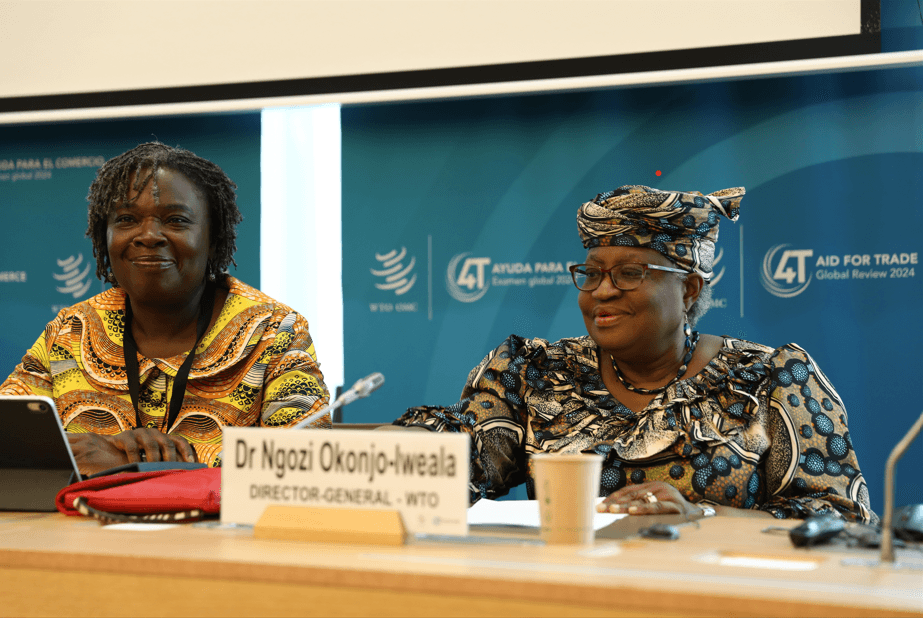
GENEVA — The global trading system is entering one of its most consequential periods in decades. Rising protectionism, accelerating climate policies, and deepening geopolitical fragmentation are reshaping international commerce in 2026, according to a new report from UN Trade and Development (UNCTAD).
Global Trade Faces Historic Crossroads: Tariffs, Climate, and Fragmentation Reshape 2026 Economic Landscape
GENEVA — The global trading system is entering one of its most consequential periods in decades. Rising protectionism, accelerating climate policies, and deepening geopolitical fragmentation are reshaping international commerce in 2026, according to a new report from UN Trade and Development (UNCTAD).
The January Global Trade Update outlines ten structural trends redefining trade flows, industrial policy, and economic cooperation worldwide.
Record Trade Growth, Fragile Foundations
Global trade surpassed $35 trillion in 2025, marking a 7 percent increase from the previous year. However, UNCTAD warns that growth momentum is weakening.
Global GDP expansion is projected at 2.6 percent in 2026. Developing economies excluding China are expected to slow to 4.2 percent. The United States faces a projected slowdown to 1.5 percent growth.
The headline numbers suggest resilience, but underlying structural pressures remain significant.
Tariff Surge: A Return to Protectionism
The most striking shift is the sharp rise in tariffs, particularly in the United States. According to UNCTAD, average U.S. import tariffs have climbed from 2.4 percent in early 2025 to nearly 18 percent in 2026, the highest level since the 1930s.
Under President Donald Trump, tariffs are increasingly used as instruments of industrial strategy and geopolitical leverage.
Economic Ripple Effects
Supply Chain Disruptions
Companies are reassessing sourcing strategies and relocating manufacturing operations.
Investment Uncertainty
Frequent policy shifts complicate long-term planning.
Uneven Impact
Smaller economies face higher exposure and fewer alternatives.
Fiscal Pressure
Commodity exporters risk revenue shortfalls and budget strain.
Even before implementation, tariff announcements can disrupt trade flows as firms adjust preemptively.
Climate Policy Meets Trade Policy
Climate action is now deeply intertwined with commerce.
Over 100 countries have enhanced climate commitments. UNCTAD estimates these pledges could reduce global emissions by 12 percent by 2035. However, climate measures also reshape trade competitiveness.
Clean Energy Expansion
Clean energy technology markets could reach $640 billion annually by 2030.
The transition is influencing trade through:
-
Carbon pricing mechanisms
-
Green industrial subsidies
-
Environmental product standards
-
Supply chain reshoring
The European Union’s carbon border adjustment mechanism introduces carbon-based import costs, favoring low-emission producers.
Mineral Market Volatility
The clean energy transition has created fluctuations in critical mineral markets.
By late 2025, prices for key clean-energy minerals were between 18 and 39 percent below 2021–22 peaks. While this supports affordable electric vehicles and renewables, it reduces mining investment incentives.
Mining investment growth slowed sharply in 2024, raising long-term supply concerns.
Non-Tariff Barriers Expand
Beyond tariffs, non-tariff measures are increasing. Regulatory standards tied to safety, health, and environment create compliance costs.
These measures often affect developing economies more severely due to limited administrative and technical capacity.
Flexible frameworks and targeted assistance may be necessary to prevent unintended exclusion.
Geopolitical Fragmentation Intensifies
According to reporting from TIME, geopolitical fragmentation is among the top global risks of 2026.
U.S. trade policy has shifted toward a more interventionist approach that includes:
-
Tariffs
-
Equity stakes
-
Revenue-sharing arrangements
-
Strategic investment conditions
Trade relationships are increasingly shaped by political alignment rather than purely economic logic.
China's Alternative Positioning
Xi Jinping has publicly defended globalization and open trade frameworks.
China continues to expand infrastructure partnerships, clean energy exports, and digital connectivity initiatives. This divergence between Washington and Beijing has global implications, particularly for developing economies seeking investment and market access.
Developing Economies Under Pressure
The World Bank reports that many advanced economies have surpassed pre-pandemic income levels, while roughly one-quarter of developing economies remain below 2019 benchmarks.
Trade fragmentation and policy unpredictability disproportionately affect countries dependent on exports and foreign investment.
The WTO at a Turning Point
The World Trade Organization faces mounting challenges.
Debates now center on:
-
Climate-related trade rules
-
Industrial subsidies
-
Digital commerce governance
-
National security exceptions
The core question is whether the multilateral system can adapt or whether trade governance will shift toward regional and bilateral arrangements.
Regional Trade Dynamics
Asia-Pacific
Remains the most dynamic region but faces strategic tension between U.S. and Chinese influence.
Europe
Climate-linked trade measures redefine competitiveness.
Latin America
Navigates pressure from both U.S. and Chinese engagement.
Africa
Holds significant potential in critical mineral supply chains but requires infrastructure and technology access.
Policy Priorities Identified by UNCTAD
-
Preserve trade openness where possible
-
Support developing country adaptation
-
Modernize multilateral trade rules
-
Align climate and development goals
-
Establish clear digital trade frameworks
Conclusion: A Defining Economic Moment
The global trading system is undergoing structural transformation. Protectionism, climate transition, digitalization, and geopolitical rivalry are reshaping rules that governed commerce for decades.
The direction taken in 2026 will determine whether the world moves toward a more resilient and sustainable trading framework or toward deeper fragmentation.
The system is changing. The outcome remains uncertain.
About the Author

Routine of Sunsari
Author


Comments (0)
Please login to leave a comment
No comments yet. Be the first to comment!