
Major Natural Gas Discovery: 80.70 Billion Cubic Metres Confirmed in Jaljale, Dailekh – A Step Toward Energy Independence for Nepal
The China Geological Survey's final report confirms 80.70 billion cubic metres of methane gas reserves in Dailekh's Jaljale area, down from preliminary estimates but still a significant find for Nepal's energy future. Commercial viability awaits well testing. #NepalGasDiscovery #EnergyNepal #Dailekh
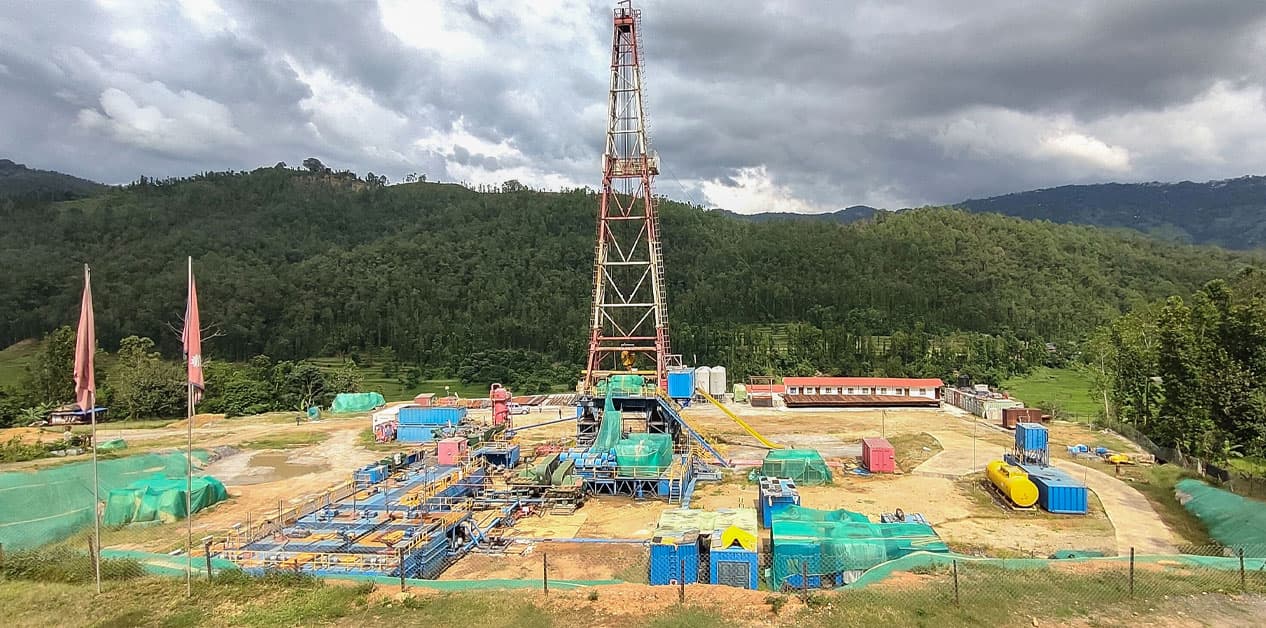
Dailekh/Kathmandu, February 12, 2026 – In a landmark development for Nepal's energy sector, a massive deposit of 80.70 billion cubic metres of natural gas (primarily methane) has been officially confirmed at Jaljale in Ward No. 1 of Bhairabi Rural Municipality, Dailekh district, Karnali Province.
The confirmation comes from the final exploration report submitted by the China Geological Survey (CGS) to the Government of Nepal's Department of Mines and Geology (DMG). Spokesperson Dharma Raj Khadka announced the findings, stating that comprehensive geological studies, including seismic surveys, magnetotelluric analysis, geochemical assessments, and deep drilling, have validated the substantial reserve.
This marks a revision from the preliminary report released in June 2025, which estimated up to 112 billion cubic metres based on initial data from one of the targeted wells. The final figure of 80.70 billion cubic metres, while lower by about 32 billion cubic metres, remains a medium-sized reserve by global standards and represents a major breakthrough in Nepal's long-standing quest for domestic hydrocarbon resources.
Exploration efforts in the Jaljale area began under a bilateral agreement between Nepal and China, with technical and financial support from the CGS valued at approximately Rs 2.40 billion. Drilling operations, which reached depths exceeding 4,000 metres starting in 2021 and intensifying in 2023–2025, involved advanced techniques by teams from CGS and associated Chinese firms like CNPC Xibu Drilling Engineering Company. The project included multiple phases of surveys and sample collection to assess both gas and potential oil presence in non-conventional formations, such as tight or shale gas trapped in hard rock layers.
Experts emphasize that while the reserve size is now confirmed, this is only the storage volume. The critical next step is "well testing," which will involve using specialized equipment to fracture rocks, release the gas, and evaluate flow rates, pressure, quality, and extractable quantities. "So far, we have only determined the size of the storage," Khadka explained. "Until well testing is carried out, it is not possible to finalize how much gas can be extracted commercially, what technology would be most suitable, or the overall production feasibility."
The gas is described as non-conventional methane, requiring hydraulic fracturing or similar advanced methods for viable extraction—technologies that Nepal would likely need international partnerships to implement efficiently.
This discovery holds immense promise for Nepal, a country that imports nearly all its petroleum products and cooking gas, leading to high costs, supply vulnerabilities, and a significant trade deficit. If commercially viable, the Jaljale reserve could reduce dependence on imports from India and other sources, lower energy prices for households and industries, create jobs in Karnali Province (one of Nepal's most underdeveloped regions), and boost local economies through infrastructure development. Some optimistic earlier projections (from initial phases) suggested potential reserves across the area could meet national demand for decades, though the confirmed figure tempers those to a more realistic scale.
The find has already sparked discussions on energy policy, with calls for transparent management, environmental safeguards (given the hilly terrain and potential seismic risks), and equitable benefit-sharing with local communities in Bhairabi Rural Municipality. Locals in Dailekh have long awaited tangible outcomes from the exploration, hoping for employment opportunities and improved livelihoods.
The Department of Mines and Geology, in coordination with relevant ministries, is expected to outline the next phase soon, including proposals for well testing and possible partnerships for production. This comes amid Nepal's broader push for energy diversification, including hydropower, renewables, and now hydrocarbons.
As Nepal navigates post-2025 political transitions and economic recovery, discoveries like this in Dailekh could play a pivotal role in achieving greater self-reliance and sustainable development.
About the Author

Routine of Sunsari
Author

Comments (0)
Please login to leave a comment
No comments yet. Be the first to comment!