Harka Sampang Bets His Political Future on Sunsari-1: Can Dharan's Reform Mayor Win a Parliamentary Seat?
Harka Raj Rai (Sampang), who swept Dharan's mayoral race as an independent in 2022 and became a symbol of youth-driven change, has resigned his mayorship and is now contesting the March 5 HoR election from Sunsari-1 under his own party's banner. #HarkaSampang #Sunsari1 #Nepal2026
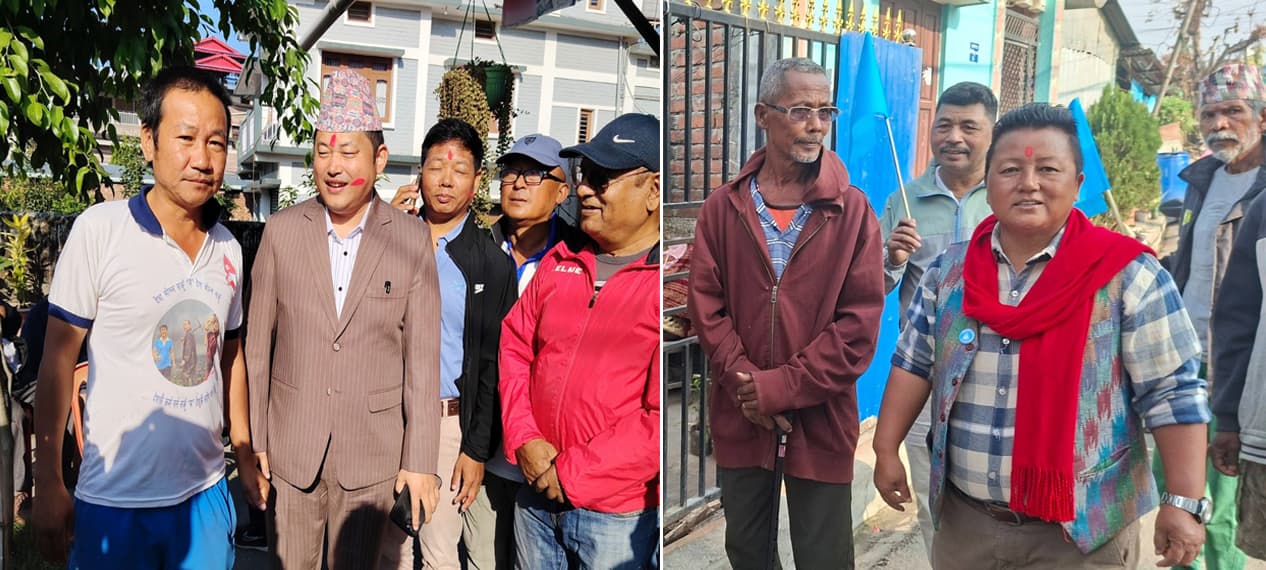
The rise of Harka Raj Rai, popularly known as Harka Sampang, from a grassroots independent mayor to a national parliamentary contender exemplifies the shifting dynamics in Nepal's post-2025 political landscape. Following the widespread Gen Z-led protests that forced government changes and paved the way for an interim administration under Nepal's first female Prime Minister, Sushila Karki, the stage was set for early general elections on March 5, 2026 (Falgun 21, 2082 BS). These polls will elect 275 members to the House of Representatives through a mixed system: 165 first-past-the-post (FPTP) seats and 110 proportional representation (PR) seats.
Sampang's journey began with his stunning victory in the 2022 local elections as an independent candidate for mayor of Dharan Sub-Metropolitan City, securing 20,821 votes under the iconic lauro (bamboo staff) symbol. Defeating candidates from established parties like CPN-UML, he quickly became a symbol of anti-establishment sentiment. His tenure focused on tangible, hands-on solutions, most notably a high-profile voluntary labor campaign where residents and volunteers dug trenches, repaired pipelines, and tackled Dharan's decades-old drinking water crisis without relying on bureaucratic contractors. This initiative garnered massive social media attention, earning him widespread admiration among youth, the Kirat community, and ordinary citizens frustrated with traditional politics.
In late 2025, amid the national upheaval, Sampang formalized his movement by registering the Shram Sanskriti Party (Labour Culture Party) with the Election Commission. The party emphasizes grassroots activism, compulsory national service elements, voluntary labor as a cultural value, and a nationalist-populist agenda. Sampang, now 43 (born February 27, 1983), resigned as Dharan mayor on January 19, 2026, submitting his resignation to Deputy Mayor Aindra Bikram Begah. This move was a legal necessity to contest federal polls and signaled his ambition to scale up from local governance to national leadership—some aides even framed him as a potential prime ministerial figure.
He officially filed his candidacy for Sunsari-1 on January 20, 2026, under the Shram Sanskriti Party banner. The constituency, encompassing all 20 wards of Dharan Sub-Metropolitan City, wards 1–5 of Barahakshetra Municipality, and wards 6–7 of Ramdhuni Municipality, boasts approximately 150,393 registered voters (with slight variations reported across sources, around 150,232–150,393). Historically a CPN-UML stronghold, the seat was won in 2022 by Ashok Kumar Rai (Janata Samajbadi Party Nepal, with UML backing) with 17,059 votes, narrowly edging out Goma Tamang (then Rastriya Swatantra Party) who received 16,606 votes—a margin of just 453 in a fragmented race influenced by alliances.
The 2026 contest in Sunsari-1 has exploded into one of the most watched battles nationwide, with 26–27 candidates in the fray (reports vary slightly between 26 and 27, including 19 party-affiliated and several independents). Key contenders include:
- Harka Sampang (Shram Sanskriti Party) — leveraging his hyper-local fame, water crisis successes, and direct voter engagement through street cleaning, door-to-door campaigns, and slogans like "Vote for the soil" (his party's symbol features two hands holding soil).
- Goma Tamang (Rastriya Swatantra Party — RSP) — a formidable challenger returning after her near-miss in 2022, backed by RSP's growing momentum.
- Tikaram Limbu (CPN-UML) — representing the traditional leftist force.
- Sujendra Gole Tamang (Nepali Congress) — carrying the legacy of the grand old party.
Unlike 2022, no major pre-poll alliances have formed among big parties, increasing the likelihood of vote fragmentation and boosting independents or strong personality-driven candidates like Sampang. The field spans generations, from 31-year-old Rajkumar Limbu (Sanghiya Lokatantrik Rastriya Manch) to 68-year-old Bhupi Rai (Rastriya Sajha Party), with only a handful of women candidates highlighting ongoing gender underrepresentation.
Sampang's campaign blends activism with politics: supporters blast his signature song urging "Shram garau Nepali ho" (Let's work, Nepalis), while teams distribute pamphlets on democracy, federalism, and a directly elected executive presidency. However, challenges persist—mixed public reactions in Dharan streets (some praise his delivery, others express frustration over unfinished local issues or his departure mid-term), a complaint to the Election Commission over alleged use of children in campaigning (prompting clarification demands), and scrutiny over whether his mayoral popularity will fully translate to federal votes.
Adding national flavor, the Rastriya Swatantra Party (RSP) held a high-energy "Declaration of Change" rally in Itahari (Sunsari district) on February 24, 2026. Senior leader Balendra Shah (Balen), often projected as a prime ministerial hopeful, addressed local grievances head-on: the stalled Sunsari-Morang Industrial Corridor (Nepal's first planned industrial zone, yet to see new factories), Dharan's ongoing water woes, and safeguarding sacred Kirat sites like Mukumlung and Khuwalung. Balen pledged an industry-friendly environment free from political interference, extortion, or patronage. RSP Chair Rabi Lamichhane defended Balen against critics like Nepali Congress President Gagan Thapa and slammed long-serving parties for delivering little despite decades in power.
As March 5 approaches, Sunsari-1 has become a litmus test for Nepal's evolving politics: Can a hyper-local activist-turned-party founder disrupt entrenched forces? Sampang's brand—built on sweat equity and anti-elite rhetoric—forces rivals to confront neglected issues like water, jobs, and heritage. With no alliances and a crowded ballot, the outcome remains unpredictable, but Sampang has undeniably elevated the conversation, drawing eyes from across Nepal and the diaspora. Whether his "Harka wave" carries him to Parliament or not, his candidacy underscores a broader hunger for change in the wake of 2025's upheavals. Voters in Sunsari-1, and beyond, will decide if grassroots momentum can scale to the national stage.
About the Author

Routine of Sunsari
Author
Comments (0)
Please login to leave a comment
No comments yet. Be the first to comment!