
Sunsari Gears Up for March 5 Vote: 59 Polling Stations Flagged as High-Risk Along India Border
Sunsari's District Security Committee has classified 59 of the district's 166 polling stations as "highly sensitive" ahead of the March 5 House of Representatives election, with authorities citing the open Nepal-India border as the primary security challenge. #SunsariElection #March5Election #Nepal2026
The upcoming House of Representatives election on March 5, 2026 (Falgun 21, 2082 BS) marks a pivotal moment in Nepal's democratic journey. This early general election, announced following significant political developments including widespread youth-led protests in 2025 that led to government changes and the appointment of the country's first female interim Prime Minister, Sushila Karki, will see nearly 19 million eligible voters nationwide choose 275 members of the lower house. The polls combine first-past-the-post (FPTP) voting for 165 constituency seats and proportional representation (PR) for the remaining 110 seats, reflecting Nepal's mixed electoral system designed to balance local representation with broader national inclusivity.
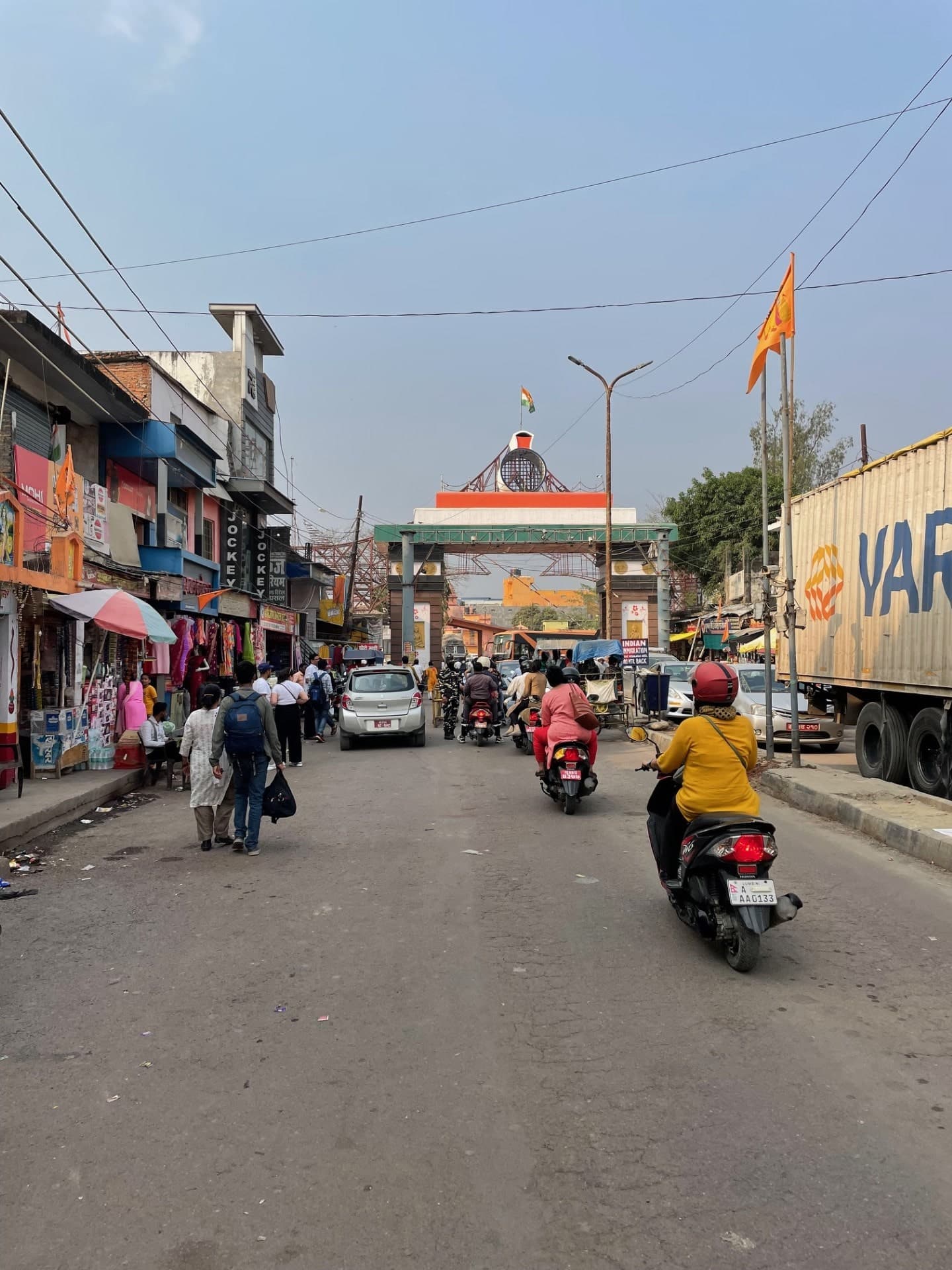
In Sunsari district, located in Koshi Province along Nepal's eastern Tarai region, preparations have intensified as the election draws near—just one week away. With its strategic position sharing an extensive open border with India, Sunsari faces unique security challenges that have placed it under heightened scrutiny. The district's Sunsari District Security Committee, in collaboration with the Nepal Police, Armed Police Force (APF), and National Investigation Department (NID), has officially classified 59 out of 166 polling stations as "highly sensitive." This designation emerged from rigorous joint on-site inspections conducted across vulnerable areas, particularly those abutting the southern border.
Chief District Officer (CDO) Basudev Ghimire has emphasized that these evaluations focused on multiple critical aspects: evaluating the structural integrity and accessibility of polling facilities, pinpointing vulnerable spots within each center (such as entry/exit points prone to crowding or interference), devising effective crowd management protocols, and formulating detailed contingency plans for potential disruptions or emergencies. Inspections specifically targeted polling centers in Barju, Dewanganj, Harinagar, and Koshi Rural Municipality, all of which lie close to the porous Nepal-India border. Bhokraha municipality has also been flagged for additional vigilance.
The open border remains a persistent concern for election authorities in Sunsari. Nepal and India maintain a largely unrestricted frontier under bilateral agreements, allowing free movement for citizens of both countries. This facilitates trade, family ties, and daily commutes but raises fears of external interference—such as outsiders attempting to influence voters in polling queues, disrupt proceedings, or smuggle in unauthorized materials like fake ballots or propaganda items. To mitigate these risks, Nepali security forces have strengthened coordination with their Indian counterparts, including joint patrols and intelligence sharing. Recent reports indicate that border points may be fully sealed or heavily restricted in the 72 hours leading up to polling day to prevent any cross-border anomalies.
Sunsari district encompasses four House of Representatives constituencies—Sunsari-1, Sunsari-2, Sunsari-3, and Sunsari-4—with a total of 580,945 registered voters spread across 166 polling stations and 591 booths. District Election Officer Krishna Prasad Paudel has overseen the deployment of a substantial workforce: 1,449 election employees in total, broken down into 161 polling officers, 161 assistant polling officers, 483 assistant employees, 161 support employees, and 483 volunteers. Training for these personnel, including sessions on election security, crowd control, and procedural adherence, is actively underway at locations like Sarada Secondary School in Inaruwa.
To accommodate voters with special circumstances, the District Election Office has established two temporary polling stations. One is at Jhumka Prison in Ramdhuni Municipality-5, enabling inmates to cast their ballots. The other is at the Jhumka Agricultural Entrepreneur Promotion Center in Ramdhuni Municipality-1, serving on-duty government employees and security personnel. Importantly, these temporary setups allow voting only for the proportional representation (PR) list, not for direct FPTP candidates, aligning with standard protocols for such facilities. Over 2,000 temporary voters are expected in this category, though final numbers will be confirmed closer to the date.
Security deployment has reached an advanced stage. More than 3,500 dedicated election police personnel are being mobilized—3,149 from the Nepal Police and 429 from the Armed Police Force—under the Integrated Procedure on Recruitment, Selection, Appointment, and Mobilization of Election Police (Nepal Police and Armed Police Force), Procedure-2082. The Nepal Army has also been positioned strategically in high-risk zones, especially near sensitive border points and constituencies with noted political rivalries or tensions. All-party meetings at the constituency level have fostered consensus among political actors to strictly adhere to the election code of conduct, promoting a peaceful, fair, and intimidation-free atmosphere.
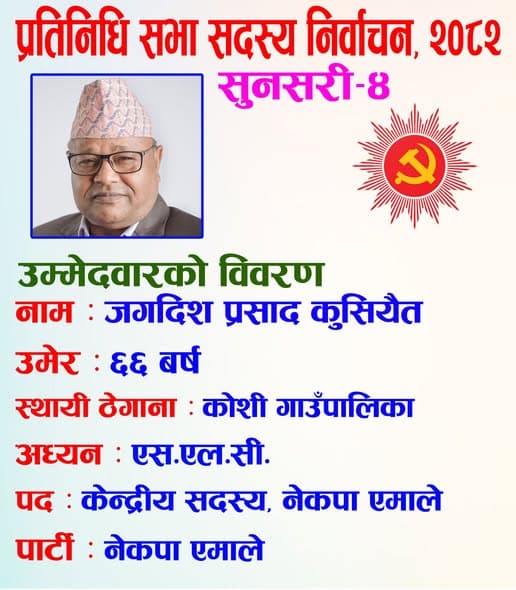
Sunsari's constituencies are drawing particular national attention. For instance, Sunsari-1 features a crowded field with 26 candidates, including high-profile independents and party nominees, amid intense local campaigns. Political parties have pledged collective responsibility to maintain harmony, and multi-agency teams continue round-the-clock monitoring.
For voters heading to the polls on March 5, key reminders include bringing valid identification (such as citizenship certificates or voter ID cards) to access polling booths, which will operate from 7:00 a.m. to 5:00 p.m. No widespread curfews or movement restrictions are in effect at present, but the District Administration Office retains the authority to impose localized measures if any incidents arise. Citizens with security concerns or queries about their assigned polling station are urged to contact the District Election Office in Inaruwa promptly.
As ballot papers and materials have been distributed nationwide (including to Sunsari), and final logistics are locked in, authorities express confidence that these comprehensive measures—rooted in inspections, inter-agency collaboration, border vigilance, and community engagement—will ensure a smooth, transparent, and incident-free election for Sunsari's nearly 581,000 registered voters. The true test will unfold on March 5, but the groundwork laid reflects a serious commitment to safeguarding Nepal's democratic process in this historic vote.
About the Author

Routine of Sunsari
Author
Comments (0)
Please login to leave a comment
No comments yet. Be the first to comment!