
Sunsari-Morang Industrial Corridor Stands Idle as March 5 Election Candidates Promise Revival
Nepal's first industrial zone — the Sunsari-Morang Industrial Corridor — has seen no new industrial establishments in years, and as election campaigns heat up across Sunsari, the stalled corridor has emerged as a key campaign issue for parties of all stripes. #SunsariMorang #IndustrialCorridor #Nepal2026
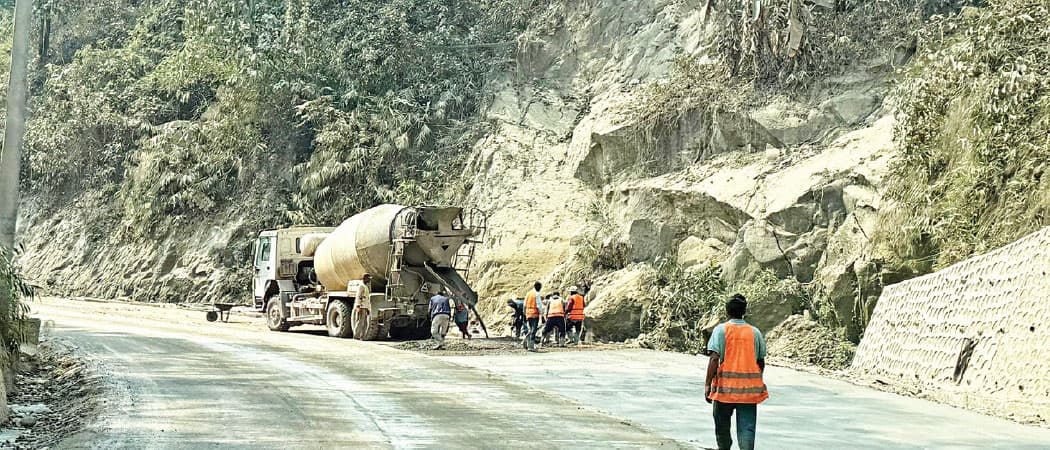
The Sunsari-Morang Industrial Corridor, Nepal's pioneering industrial zone established in the eastern Tarai region decades ago, was envisioned as a flagship hub for export-oriented manufacturing, job creation, and economic growth. Spanning key areas between Dharan, Itahari, Biratnagar, and surrounding districts in Koshi Province, the corridor leverages strategic advantages: flat terrain ideal for factories, proximity to Nepal's largest eastern commercial hub (Biratnagar), excellent connectivity via the Koshi Highway and B.P. Highway to India, and potential for sectors like textiles, agro-processing, light engineering, food processing, and jute-based industries.
Yet, despite its promising foundation—once home to hundreds of factories employing tens of thousands—the corridor has long languished in a state of chronic under-utilization and stagnation. Recent reports and industrial assessments confirm that no significant new industries have been established in recent years, with existing operations hampered by systemic barriers. Production capacity in many factories hovers around 40% or lower during crises, driven by recurring issues such as:
- Unreliable and poor-quality electricity supply from the Nepal Electricity Authority (NEA), including frequent unannounced power cuts that disrupt operations and force industries to turn to costly alternatives like solar panels (over 40 units installed in the corridor as of early 2026, with more agreements signed).
- Inadequate internal infrastructure, including poorly maintained access roads, lack of reliable utilities, and absence of effective single-window clearance mechanisms for investments.
- Persistent political interference: entrepreneurs often face demands to seek "blessings" or approvals from party-affiliated networks before starting businesses, followed by ongoing pressures for "donations" or contributions in exchange for permits, protection, and smooth operations.
- Unpredictable labor relations, bureaucratic hurdles, and external shocks like raw material shortages (e.g., Bangladesh's restrictions on jute exports in 2026, pushing local jute mills to 40–60% capacity and threatening closures).
- Broader challenges such as high production costs, flooding vulnerabilities (as seen in past inundations affecting hundreds of units), and limited innovation or export competitiveness.
These factors have deterred fresh investment, kept land barren in parts of the zone, and perpetuated a cycle of underemployment in Sunsari and Morang districts. With Sunsari's population at around 927,000 (2021 census) and a youthful demographic bulge in the 18–35 age group, many residents remain trapped in low-productivity agriculture, informal services, or overseas migration to Gulf countries, Malaysia, and India—where remittances form a lifeline rather than a bridge to local prosperity.
As the March 5, 2026 general election approaches—with polling just days away—the corridor has surged to the forefront of campaign rhetoric in Sunsari district's four constituencies. The issue encapsulates broader frustrations with decades of governance failures in job creation and industrial revival.
At a high-profile Rastriya Swatantra Party (RSP) "Declaration of Change" rally in Itahari on February 24, 2026, senior leader Balendra Shah (Balen)—projected as a prime ministerial contender—directly addressed the stagnation. He called the lack of new industries in "the country's first industrial zone" deeply unfortunate and pledged radical reforms under an RSP-led government: ending the culture of political patronage for business approvals, eliminating post-establishment "donation" extortion, and fostering a truly industry-friendly environment free from interference. Balen emphasized connecting local problems (like eastern Tarai produce not reaching markets efficiently) with practical solutions, while RSP Chair Rabi Lamichhane contrasted this vision with established parties' track records, mocking long-serving MPs and ministers for only recently discovering the need to amend laws for basic infrastructure like roads.
Major traditional parties—CPN-UML and Nepali Congress—have also spotlighted the corridor in Sunsari campaigns, though their approaches lean toward infrastructure upgrades, public-private partnerships, and increased investment rather than the depoliticization and structural overhaul RSP advocates. Local industry chambers, including those in Inaruwa and Itahari, echo calls for coordinated reforms: reliable power, streamlined clearances, merit-based land allocation (instead of party favoritism), and incentives to attract emerging sectors like data centers or AI infrastructure (discussed at events like the Indo-Nepal Trade Festival 2026 in New Delhi, leveraging Nepal's clean energy potential and geographic position).
Economists and provincial observers stress that meaningful revival demands simultaneous action across multiple fronts—beyond election promises—to break the impasse. Whether the winners of Sunsari's seats (and the broader parliamentary makeup post-March 5) possess the political will, majority support, and cross-party consensus to drive these changes remains uncertain. For now, the corridor stands as a stark symbol of unfulfilled potential in Nepal's eastern Tarai: a zone built with fanfare, yet starved of the reforms needed to deliver jobs, growth, and reduced migration dependency for hundreds of thousands in Koshi Province. As voters head to the polls, the Sunsari-Morang Industrial Corridor's fate could hinge on which vision—reformist disruption or incremental investment—gains traction.
About the Author

Routine of Sunsari
Author

Comments (0)
Please login to leave a comment
No comments yet. Be the first to comment!